
 Open | Tu-Fr 9-5pm, Sat 12-5pm
 1400 S Grand St, Monroe, LA 71202
 318-329-2237

Events
Upcoming Exhibitions

Bernard Mattox: The Problem of the Bridge, and Chasing the Thing 50 Years On
December 3, 2026 — February 20, 2027
Masur Museum Main House
December 3, 2026 – February 20, 2027
Public Reception: December 3rd, 2026 from 5:30 – 7:30 PM
Bernard Mattox is a New Orleans-based artist who specializes in multi-media and ceramics, presenting his 50-year retrospective with Masur Museum. His work blends the vibrant imagery reminiscent of New Orleans street-life with totem-like figures that call to mind tribal imagery.

64th Annual Juried Competition
March 11, 2027 — May 15, 2027
Sponsored by The Northeast Louisiana Arts Council 

Masur Museum Main House
March 11 – May 15, 2027
Public Reception: March 11th, 2027 from 5:30 – 7:30 PM
This year’s juror: Moment Solomon
About the Exhibition
The Masur Museum of Art’s Annual Juried Competition showcases contemporary artists throughout the United States of America working in any medium. First started in 1963, the Annual Juried Competition is the Masur Museum’s longest-running tradition and one of its best-reviewed exhibitions each year.
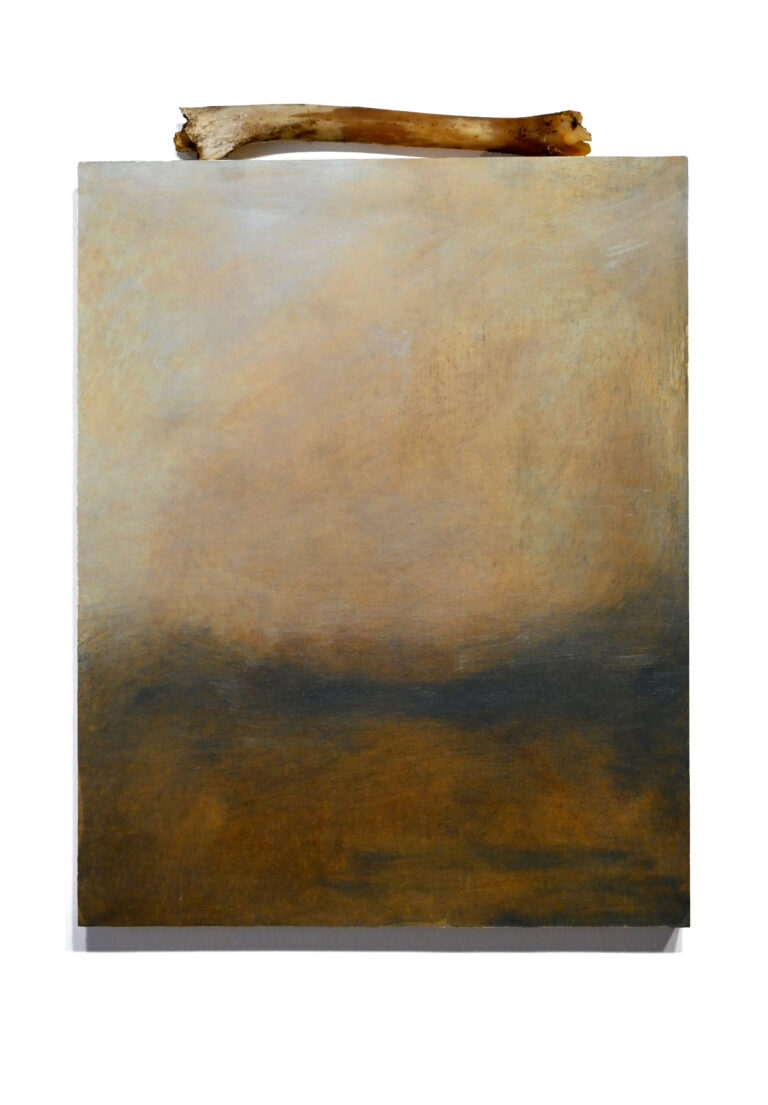
Claire Pope: Alters
June 10, 2027 — August 14, 2027
Masur Museum Downstairs, Main House
June 10, 2027 – August 13, 2027
Public Reception: TBA
Claire Pope’s work explores the notion of quietude and wonder as found in Nature during the present Anthropocene Age. Alters presents the viewer with an internal exploration of the relationship between the majesty of the land and the alteration of the earth by humans.
Past Exhibitions
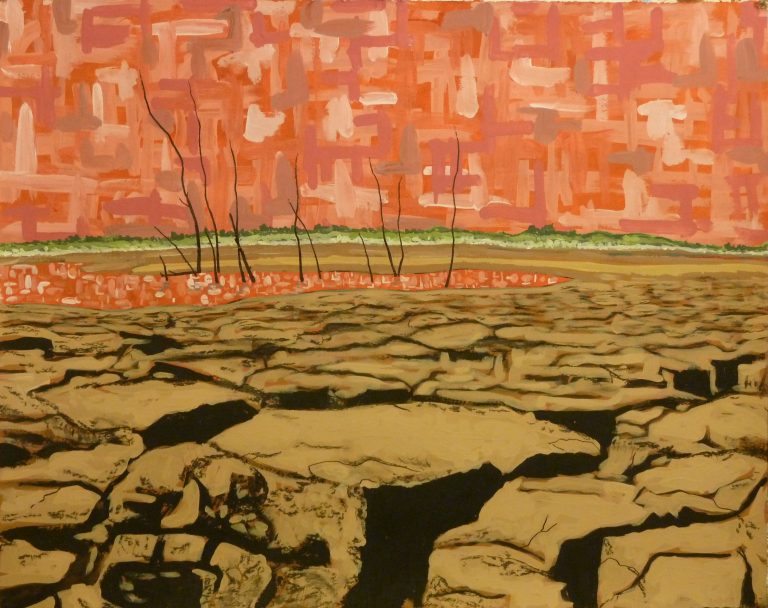
52nd Annual Juried Competition
March 4 12:00 AM - June 20, 2015 12:00 AM
The Masur Museum of Art and CenturyLink Security Systems Proudly Present:
The 52nd Annual Juried Competition
About the Competition
The Masur Museum of Art’s Annual Juried Competition showcases contemporary artists throughout the United States of America working in any medium. This long running juried competition also showcases some of America’s best curatorial talent. Recent jurors include: Kelly Shindler, Contemporary Art Museum St. Louis; George Shackelford, Kimbell Art Museum; Liza Simone, Phantom Galleries, Los Angeles; Alison Greene, Museum of Fine Arts, Houston; David Houston, currently Bo Bartlett Center; and Miranda Lash, currently Speed Art Museum. Enter to get your work seen! Go to masurjuried.org to enter!
Sandra Firmin, Juror
Director and Chief Curator, Colorado University Art Museum Sandra Q. Firmin was Curator of the UB Art Galleries, gallery of the University of Buffalo SUNY, a position she held from 2003 to 2014. She holds an M.A. from Bard College’s Center for Curatorial Studies (2002), and was awarded a Philadelphia Exhibitions Initiative Fellowship at Arcadia University Art Gallery (2003). Firmin co-curated the traveling exhibition Kim Jones: A Retrospective (with Julie Joyce). The exhibition was accompanied by the catalogue “Mudman: The Odyssey of Kim Jones” (MIT Press, 2006), co-edited with Joyce. In 2010, Firmin organized Artpark: 1974–1984, an exhibition and publication (Princeton Architectural Press, 2010) chronicling the seminal years of an innovative residency program located in Lewiston, New York, just north of Niagara Falls. At the UB Art Galleries, Firmin established an annual residency program in which artists are presented with an empty gallery to transform over time while open to the public. These commissioned projects aim to forge meaningful interactions between artists and diverse groups of people while acknowledging a turn toward research-based and ephemeral site-specific approaches in contemporary art. In 2014 Firmin co-chaired (with Julian Cox) the Association of Art Museum Curators’ annual conference in Detroit, and moderated the panel Urban Ecologies and Cultural Exchange.
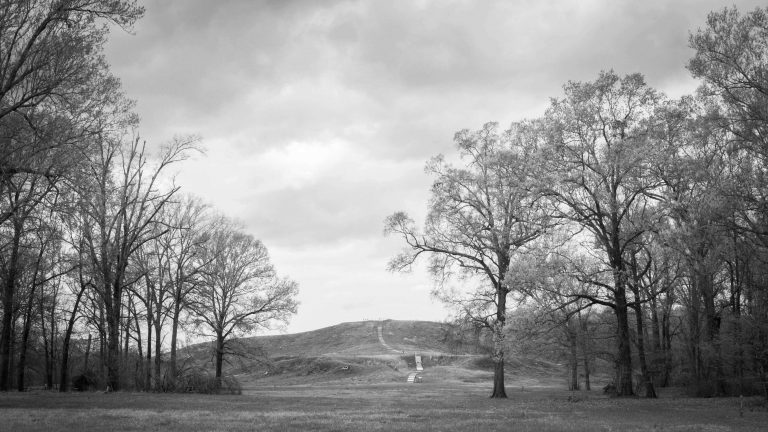
Shared Earth: The Ancient Mounds Project
October 29, 2014 12:00 AM - February 14, 2015 12:00 AM
This exhibition features photographs by Jenny Ellerbe. It deals with the landscape of Northeast Louisiana as a cultural object whose layers heap one on top of another. Some are forgotten, others not. Specifically, Ellerbe’s subject matter is the ancient mounds scattered throughout Northeast Louisiana. Some of the mounds were constructed as early as 5000 BCE, but the largest and most complex mounds, located in the Poverty Point State Historic Site, were constructed from 1700 to 1100 BCE. Built by hunter-fisher-gatherers, the Poverty Point design has not been duplicated anywhere in the world. The site includes a variety of earthen constructions including five mounds ranging between two and twenty-two meters tall and six low lying concentric rings, the longest of which is over one kilometer long. One factor that likely contributed to the mounds’ successful construction was a highly developed trading network that accounted for great deposits of non-local building and tool materials found there. These materials include quartz crystals, steatite, copper, galena, and iron oxide: materials that are found as far afield as Iowa, the Ozark and Appalachian Mountains, and western Georgia. The mounds at Poverty Point are also unique in North America for their age, the proliferation of new styles of tools and cultural objects, their size, and the fact these infrastructure intense projects were completed by hunter-fisher-gatherers. The civilization that occupied Poverty Point from 1700 to 1100 BCE marked a high water point for cultural achievement that was not surpassed for several hundred years. This degree of achievement makes Poverty Point truly noteworthy in the history of humankind. The Poverty Point mounds were inscribed on the UNESCO World Heritage List* earlier this year. The mound building tradition continued in Louisiana and throughout the Southeast at varying scales until contact with European cultures disrupted it.
The manner in which Ellerbe photographs the mounds positions them as monuments to humans’ fleeting existence and a testament to the power of a nearly forgotten culture’s achievements. She often uses long dramatic shadows to indicate the passage of time and portrays contemporary human objects as though they are detritus. From image to image the mounds may be depicted as monumental or as hidden, virtually forgotten things. This contrast parallels inconsistent general awareness of the mound tradition in Northeast Louisiana. Ellerbe uses dramatic Louisiana cloud formations as a critical foil to this issue. Their regular appearance points, as it does in many art historical traditions, to the importance, majesty, and timeless nature of a thing. The Shared Earth exhibition will pair photographs with a selection of archaeological artifacts from Poverty Point. This element of the exhibition is intended to contextualize the historic nature and importance of the developments at mound sites in Northeast Louisiana within the overall story of human civilization. The artifacts speak to what we know of a moment in time as well as the human condition itself by illustrating how all human endeavors, artistic and otherwise, drive and shape our environment, ensuring our survival and giving our lives’ meaning. This is the unavoidable nature of the human condition.
Shared Earth: The Ancient Mounds Project exhibition is a collaboration between the Poverty Point Station Archaeology Program and the Masur Museum of Art. It will feature fine art photography and archaeological artifacts. Free lectures and educational activities will take place at the Masur and Poverty Point State Historic Site during the exhibition. Call the Masur at 318.329.2237 or like us on Facebook for more information. This exhibition is supported by a grant from the Louisiana Division of the Arts, Office of Cultural Development, Department of Culture, Recreation and Tourism in cooperation with the Louisiana State Arts Council as administered by the Northeast Louisiana Arts Council.
*To be included on the World Heritage List, sites must be of outstanding universal value and meet at least one out of ten selection criteria. Please visit http://whc.unesco.org/en/criteria/ for more information.
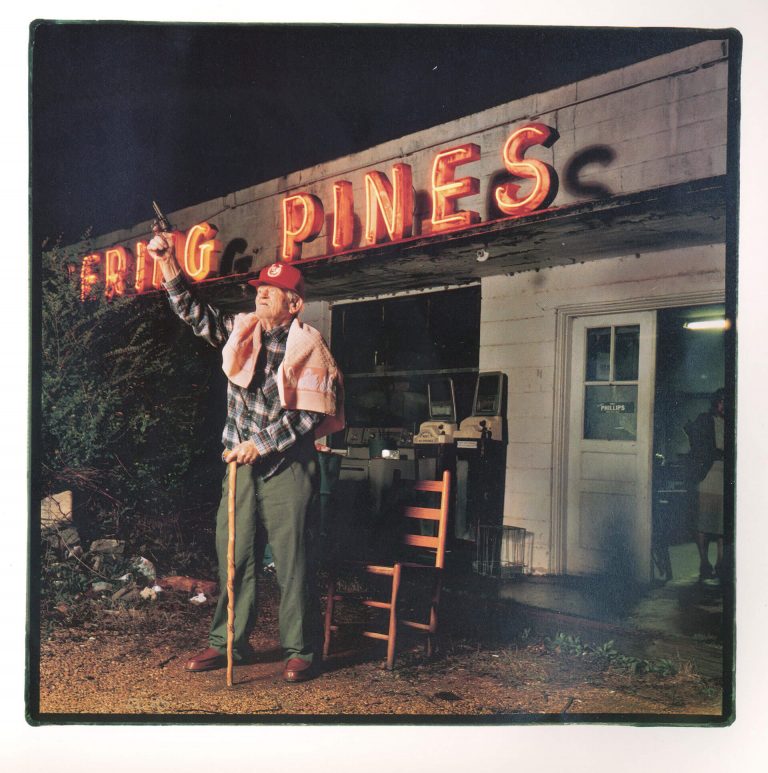
Whispering Pines
October 29, 2014 12:00 AM - February 14, 2015 12:00 AM
The Masur Museum of Art is proud to exhibit renowned photographer Birney Imes’ series Whispering Pines. The series documents the life and times of Blume Triplett, the late proprietor of Whispering Pines, a roadside bar and restaurant in Crawford, Mississippi. Two women played integral roles in his life: his wife Eppie and Rosie Stevenson, his cook and business manager. Eppie was the love of Blume’s life and when she died in 1973 Whispering Pines became a shrine to her. The restaurant was slowly overrun with ephemera that documented the trajectory of the Triplett’s lives and the American South. While the newspaper clippings and knick-knacks scattered throughout the restaurant provide the chronological and geographical context for audiences of Imes’ photographs, it is the comings and goings of the Pines’ regulars that are most important when thinking about the South in the twentieth century.
By the time Imes began photographing Blume Triplett, the abovementioned ephemera became such a presence in Whispering Pines it overwhelmed the whites only side of the restaurant. Even though integration was the law of the land well before Eppie’s death, segregation was still informally enforced in many places like the Pines. It was out of necessity that integration became a part of Blume’s life. When he began having health problems Rosie Stevenson, his African American cook, became his caretaker and took on expanded duties at the Pines. She became like family to him. This coming of age story of integration took a natural, glacial course. Rosie eventually inherited the Pines when Blume died in 1991. Imes’ images of this story possess genuine warmth and a hardscrabble honesty that parallels the South’s political, cultural, and business ascendancy in the twentieth century. For better or worse, it also illustrates how many Americans continue to deal with issues of race by slowly building relationships that change the nature of our society.
Imes has exhibited his work at The Art Institute of Chicago, Chicago, Illinois; the Center for Creative Photography, University of Arizona, Tucson, Arizona; the Morris Museum of Art, Augusta, Georgia; the Museum of Modern Art, New York, New York; the Ogden Museum of Southern Art, New Orleans, Louisiana; the Polk Museum of Art, Lakeland, Florida; the Weatherspoon Art Museum, Greensboro, North Carolina; and the Whitney Museum of American Art, New York, New York. His work has also been collected by several of these venues including The Art Institute of Chicago and the Museum of Modern Art as well as many others too numerous to list. Imes is also broadly known for his three books of photography Juke Joint (Jackson, Mississippi, University Press of Mississippi, 1990); Whispering Pines (Jackson, Mississippi, University Press of Mississippi, 1994); and Partial to Home (Smithsonian Press, 1994). Whispering Pines will include audio recordings of Blume Triplett and other Pines regulars. There will also be a project gallery featuring mixed media art by Elayne Goodman created using Imes’ prints and objects from Whispering Pines itself.
Discover more as a member
As a member you will enjoy many benefits while supporting one of Monroe’s important cultural landmarks.
Join Today