
 Open | Tu-Fr 9-5pm, Sat 12-5pm
  1400 S Grand St, Monroe, LA 71202
  318-329-2237
Events
-
Grounds for Departure: A Historic House, An Art Museum X
Grounds for Departure: A Historic House, An Art Museum
August 20th, 2026 — October 31st, 2026
Masur Museum Main House
August 20th, 2026 – October 31st, 2026Public Reception: August 20th, 2026, 5:30 — 7:00pm
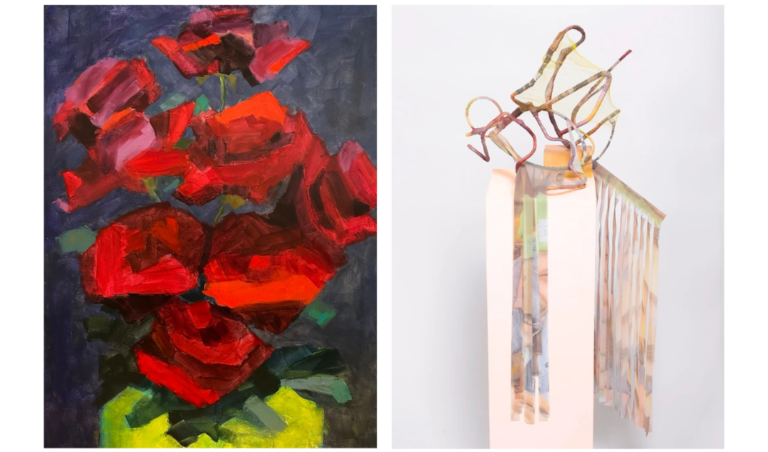
Grounds for Departure will feature abstract painting and sculpture that engages directly with the architecture of the museum’s structure, mapping its domestic history within the walls of the current-day art museum.
-
It’s Time to Grow Up (No Thanks!) X
It’s Time to Grow Up (No Thanks!)
August 20th, 2026 — October 31st, 2026
Masur Museum River Galleries
August 20 – October 31, 2026Public Reception: October 1, 2026, 5:00pm – 9:00pm (Monroe Art Crawl)
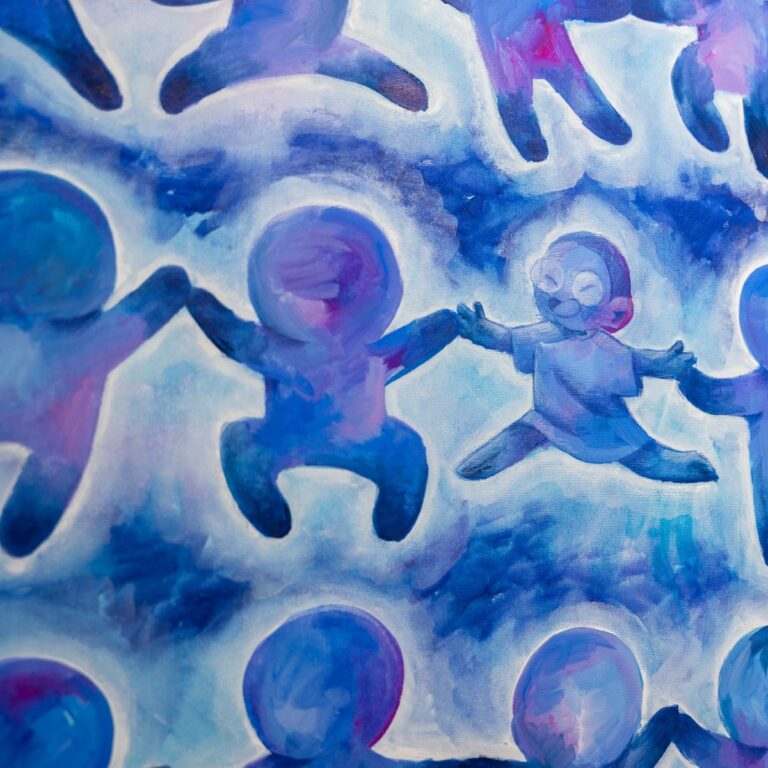
Inique Harris is a Monroe-based artist, illustrator, and art educator. Her visual art explores themes of femininity and girlhood, paired with a whimsical focus on the pure essence of creativity and love.
Upcoming Exhibitions

Bernard Mattox: Retrospective
November 19th, 2026 — February 7th, 2027
Masur Museum Main House
December 3, 2026 – February 20, 2027
Public Reception: December 3rd, 2026 from 5:30 – 7:30 PM
Bernard Mattox is a New Orleans-based artist who specializes in multi-media and ceramics. His work blends the vibrant imagery reminiscent of New Orleans street-life with totem-like figures that call to mind tribal imagery.

64th Annual Juried Competition
March 11, 2027 — May 15, 2027
Sponsored by The Northeast Louisiana Arts Council 

Masur Museum Main House
March 11 – May 15, 2027
Public Reception: March 11th, 2027 from 5:30 – 7:30 PM
This year’s juror: TBA
About the Exhibition
The Masur Museum of Art’s Annual Juried Competition showcases contemporary artists throughout the United States of America working in any medium. First started in 1963, the Annual Juried Competition is the Masur Museum’s longest-running tradition and one of its best-reviewed exhibitions each year.
Past Exhibitions

Artist-in-Residence: Beili Liu
November 28, 2016 12:00 AM - March 11, 2017 12:00 AM
The Masur Museum of Art’s Artist-in-Residence Program consistently showcases Northeast Louisiana culture and accomplished artists from outside our area. We choose artists with little to no connection to Louisiana because it removes all assumptions in terms of looking at our culture. Artists who are curious by nature, improvise well, and have something about their studio practice that is compatible with Louisiana are natural fits. If an artist is a blank slate and earnestly wants to learn about us, it will translate to our audience, who we try to include in the creative process. If we remove as many barriers as possible for people coming to the Masur to see art, it will be a more personal experience, especially for those who may be unsure of how to respond. This provides an opportunity for Louisiana natives and transplants alike to feel more connected to our shared cultural heritage.
Our most recent Artist-in-Residence, Beili Liu, is an Associate Professor in the Department of Art and Art History at the University of Texas at Austin. Most of Liu’s projects combine folk craft traditions with a sense of place to create metaphorically rich installations. Her work is always beautiful, delicate, and overwhelmingly intricate. Experiencing Liu’s work in person is like seeing a memory.
Upon inviting her to visit the Masur this past spring, we assembled a group of people who could give Liu an introduction to a variety of folk crafts tied to Louisiana. The resulting program was a Cultural Exchange Panel. Members of our community, with Liu in the crowd, listened to Sarah Albritton, Rose Fisher-Greer, Danny Frasier, and Mary Shambin speak about their experiences as masters of their crafts. Each is respectively a renowned storyteller and folk painter, an expert cane basket weaver holding onto her Choctaw roots, an amiable man who ties traditional hoop-style fishing nets with great speed, and a pillar in the quilting community of Northeast Louisiana. Susan Roach, a respected folklorist emceed the event and ensured Liu left with a thorough introduction to skills that may inform the work she creates for her exhibition at the Masur. It is my hope she carries the stories and skills she learned along with her for future projects, making her time in Louisiana part of her personal narrative.
In the days following the Cultural Exchange Panel, Liu gave a lecture about her career and studio practice, met with museum members over cocktails, ate at local restaurants with members of Monroe’s arts community, and went on a memorable canoe trip in Black Bayou Lake. While on the lake Liu was entranced by how water trapped on top of lily pads shined as though it was electrified. Upon touching it, she discovered the bubbling, flashing water flowed like quicksilver. Since hearing about the abovementioned crafts, and their ties to the land, Liu has endeavored to capture this fluid relationship in a single work of art. The selection process of the title for the exhibition, as well as the work to be exhibited, is in progress. Please come see the results, and attend more programs with Beili Liu at the Masur Museum of Art between November 28, 2016, and March 11, 2017.

Everything is Abstract
November 28, 2016 12:00 AM - March 11, 2017 12:00 AM
There is one truth that permeates Dean Dablow’s art: any attempt to depict a thing alters how it is perceived, making the depiction subjective. Rather than creating an interpretive framework that is intuitively understood by viewers, Dablow focuses on creating well-designed compositions. He works in this manner because he feels interpretation is unavoidable and uncontrollable. Being as interpretation is so inherently human, he makes work that is purposefully ambiguous, relying on individuals to make it relatable. The result of this strategy is an oeuvre overflowing with rich points of reference that are ultimately inconsequential to Dablow, but effective nonetheless.
Dablow has purposefully engaged with a variety of media over the course of his career, often mining one for all it is worth before moving on to another for a time. While this progression is sequential and can be tracked chronologically, Everything Is Abstract is laid out in our gallery spaces in a non-linear fashion. This is meant to be more indicative of Dablow’s goals as an artist. It is an homage to his process rather than a staid accounting of it. Each gallery houses a variety of his work that runs the gauntlet from pithy or profound to ominous or joyous. The sensibility of individual works of art may vary, but the unifying feature of the exhibition is the slow reveal achieved by each of them. Dablow’s excellent sense of design is at play in this regard because viewers must discover for themselves an artwork’s truth. The truths you perceive may vacillate between a visceral sense of wonder or an impending sense of doom, but regardless of the sensations you feel, it is crucial to understand they are yours.
Everything Is Abstract is a retrospective featuring examples of Dean Dablow’s work beginning in 1974, and running through 2016. Dablow was born in Superior, Wisconsin, in 1946. He holds an MFA from the University of Iowa and is currently Professor Emeritus at Louisiana Tech University. Dablow was one of only two Northeast Louisiana artists to be featured in A Unique Slant of Light: The Bicentennial History of Art in Louisiana. His work resides in the collections of the Amon Carter Museum of American Art, the Contemporary Arts Center New Orleans, the former Corcoran Gallery of Art, the Masur Museum of Art, the New Orleans Museum of Art, and others.

Accalia and the Swamp Monster
July 26 12:00 AM - November 5, 2016 12:00 AM
This installation of Kelli Scott Kelley’s series Accalia and the Swamp Monster marks the first time it will be on view alongside a wide selection of preparatory sketches, as well as Bird and Squirrel, the video that inspired the series. Accalia and the Swamp Monster is a loosely autobiographical coming of age story that references fairy tales, mythology, and Louisiana bayous in a manner that feels primordial and otherworldly. Kelley’s work feels archetypal, as though we are familiar with its narrative arc and imagery. This is the case because, as a society, we know enough about Beowulf, Artemis, anthropomorphic creatures, Joan of Arc, and other references to intuitively understand Kelley’s various nods to bygone eras. It is her use of bald cypresses, pirogues, and other familiar imagery that makes Accalia’s trials and tribulations so personal to those who make Louisiana their home.
Kelley’s work is decidedly feminine. Not only is the heroine based on Kelley herself, but her paintings are executed on re-purposed antique linens, handcrafts typically associated with women and domesticity. Accalia’s actions in the story undermine traditional cultural notions of femininity, while the materiality of the linens acknowledges them as a cultural construct to some degree. These complexities ring true when the re-purposed linens, including table runners and handkerchiefs, are thought of as items used by many people over a long period of time. It directly addresses the sense of shared cultural experience so important to many functional items, while also mirroring the transmission of oral traditions like storytelling.
Discover more as a member
As a member you will enjoy many benefits while supporting one of Monroe’s important cultural landmarks.
Join Today